
Guide to ImageDownloader.website
This article provides a comprehensive exploration of the web-based utility designed to extract and download multiple images from a single web page, offering a streamlined approach to acquiring visual assets. In the following sections, we will delve into the platform's core functionalities, examine its extensive customization settings such as scroll duration and file size filtering, and discuss the practical advantages it offers. Whether you are aiming to improve time efficiency, secure high-quality files, or ensure seamless offline access to web graphics, this guide covers everything you need to know about navigating and maximizing the features available at https://imagedownloader.website.
In the modern digital landscape, visual content is the cornerstone of online communication, marketing, and web design. Every day, professionals and casual users alike encounter websites heavily populated with inspiring graphics, essential reference materials, and high-resolution photographs. Traditionally, acquiring these assets involved a tedious, manual process of right-clicking and saving each file individually. This repetitive task not only interrupts the creative workflow but also consumes a significant amount of valuable time. An automated image aggregator completely transforms this dynamic. By utilizing a dedicated bulk downloading platform, users can bypass manual extraction entirely. The service functions by scanning a provided URL, identifying all embedded graphical content, and presenting it for batch retrieval. This innovative approach to media acquisition is rapidly becoming an indispensable part of the digital toolkit for creators across various industries.
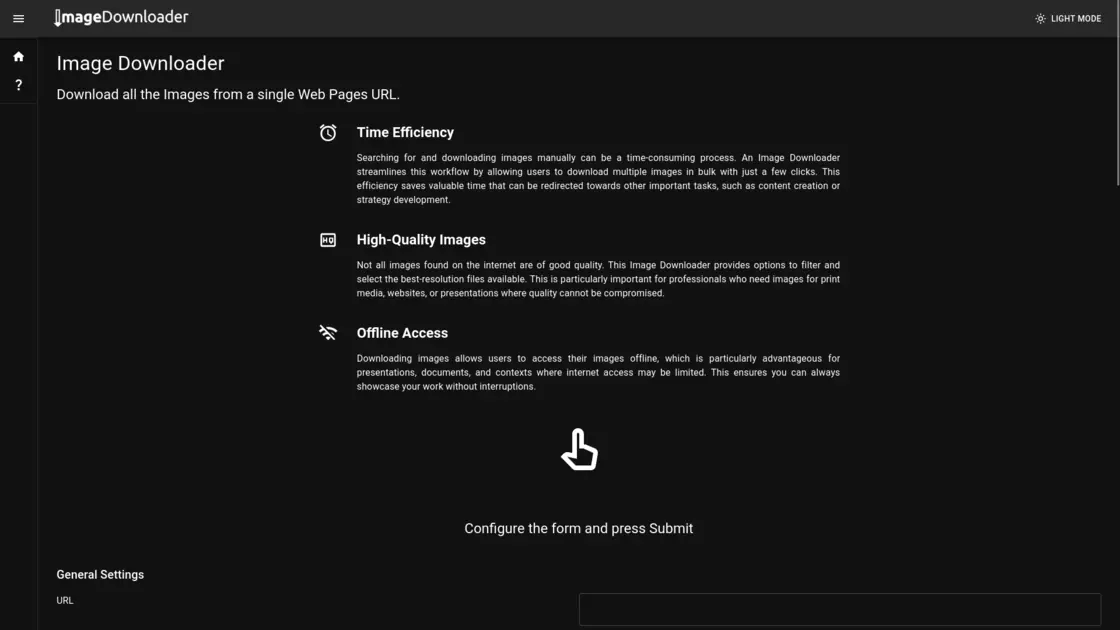
One of the most prominent benefits of using this specific platform is its unparalleled time efficiency. Searching for, right-clicking, and downloading images one by one can quickly become a laborious bottleneck, especially when dealing with image-heavy pages like online portfolios, e-commerce galleries, or expansive blog posts. The image downloader fundamentally streamlines this workflow. By allowing users to fetch multiple files simultaneously with just a few simple clicks, the platform frees up countless hours. This newly reclaimed time can then be redirected toward far more critical and cognitively demanding tasks, such as content creation, digital strategy development, or comprehensive market research.
Furthermore, the quality of digital assets is a critical concern for any professional. Not all files found on the internet are suitable for secondary use; many are heavily compressed, pixelated, or rendered in low resolutions to improve website loading speeds. This downloader addresses the quality control issue by providing robust options to filter and select only the highest-resolution files available on a given page. For professionals operating in spheres where visual fidelity cannot be compromised—such as print media design, corporate presentations, and high-end web development—this feature is absolutely vital. It ensures that the extracted assets maintain their crispness and clarity, thereby upholding the professional standards of the user's final output.
Another significant advantage of utilizing a bulk download tool is the facilitation of offline access. We live in a highly connected world, but continuous internet access is not always guaranteed. Professionals frequently find themselves in situations where Wi-Fi is unreliable or unavailable, such as during daily commutes, on flights, or in secure corporate environments. By downloading necessary visual assets in advance, users can guarantee uninterrupted access to their reference materials. This capability is exceptionally advantageous for building mood boards, compiling offline presentations, or drafting documents without the anxiety of connectivity drops. It ensures that you can continually showcase your work and maintain productivity regardless of your immediate network environment.
To fully harness the power of the platform, it is essential to understand its highly configurable user interface. The primary interaction begins in the General Settings, where users input the target URL. The system requires an absolute URL, meaning it must include the specific HTTP or HTTPS protocol to function correctly. Once the target is set, users can fine-tune the extraction process through the Aggregator Settings. One of the most sophisticated features here is the Scroll Duration control. Modern web design frequently employs "lazy loading," a technique where images only render as the user scrolls down the page. To capture these hidden assets, the downloader can be programmed to simulate a user scrolling through the target page. Users can specify the exact amount of time—between zero and sixty seconds—the tool should spend scrolling. If a page does not utilize lazy loading, this setting can be reduced to zero, significantly increasing the processing speed and delivering results almost instantaneously.
Additionally, the tool offers granular control over the volume and type of data retrieved. The "Max Images" setting allows users to cap the total number of files considered for processing, with a generous maximum limit of up to five hundred images per query. This prevents the system from being overwhelmed by massively media-dense pages and helps the user maintain an organized download folder. Furthermore, the "Check Links" feature acts as a secondary layer of precision, inspecting every direct link on the target page to verify whether it leads to a supported content type, ensuring no hidden assets are left behind.
File size filtering is another crucial dimension of the platform's utility. Users can establish a precise File Size Range, setting both minimum and maximum byte limits. By default, the tool might look for files ranging from one hundred bytes up to five megabytes, but this can be expanded drastically up to twenty megabytes for maximum limits. This filtering capability is highly strategic. For instance, by setting a higher minimum file size, a user can automatically filter out irrelevant, low-value graphics such as tiny navigation icons, social media logos, or microscopic tracking pixels. Conversely, establishing a maximum limit prevents the accidental downloading of unnecessarily massive, uncompressed files that could quickly deplete local storage space.
The versatility of the platform is most clearly demonstrated by its comprehensive support for a vast array of Content Types. The web is no longer limited to standard formats, and this tool is built to handle the modern spectrum of digital imagery. Users can selectively target specific formats, including ubiquitous standards like JPEG and PNG, which are ideal for photographs and transparent graphics, respectively. It also supports animated formats like GIF and APNG. More importantly, the tool accommodates next-generation, highly optimized web formats such as WEBP and AVIF, which provide superior compression and quality but are often difficult to download manually. Support extends further to high-efficiency formats common in mobile photography like HEIF and HEIC, scalable vector graphics (SVG) essential for responsive web design, standard website icons (ICO), and even legacy bitmap files (BMP). This expansive compatibility ensures that no matter what type of graphic is hosted on the target page, the tool can successfully extract it.
Security and usability are also clearly prioritized in the platform's design. The interface boasts a sleek Dark Mode option, reducing eye strain for users who spend long hours working behind a screen. Furthermore, to maintain the integrity of the service and prevent automated abuse, the platform integrates human verification through Google's reCAPTCHA system. While this adds a brief step to the submission process, it is a necessary measure to ensure the tool remains stable, fast, and accessible to genuine users without being overwhelmed by malicious bots.
In summary, this bulk extraction utility represents a highly refined solution to a common digital hurdle. By offering deep customization regarding lazy-load scrolling, precise file size parameters, and comprehensive format support, it caters to the nuanced needs of modern internet users. Whether you are aggregating inspiration, archiving web layouts, or compiling raw materials for a creative project, mastering this tool provides a distinct advantage in navigating and capturing the visual web.